

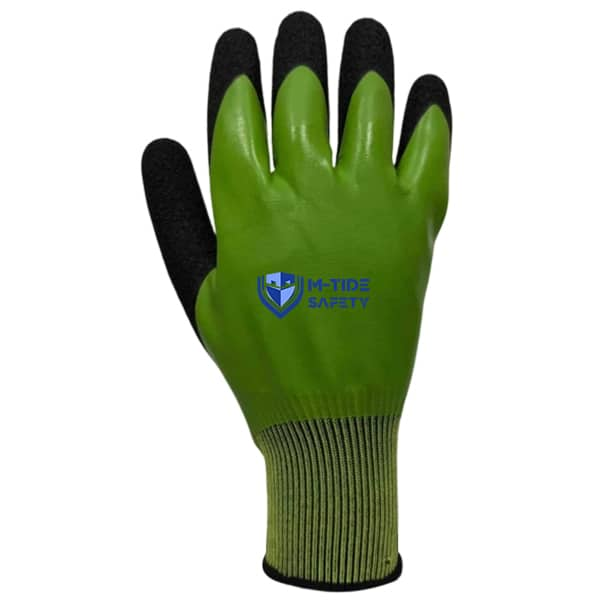
Many workers perform demanding tasks in conditions where their hands are exposed to both sharp objects and moisture. Rain, water, oil, mud, wet materials, and cold temperatures can make tools and components difficult to control. At the same time, sharp metal, glass, knives, wires, hooks, and machinery parts can create serious cut hazards. Waterproof cut resistant gloves are designed to provide combined protection by helping keep the hands dry while reducing the risk of cuts and abrasions.
These gloves are commonly used in construction, seafood processing, fishing, waste management, agriculture, cold storage, utilities, outdoor maintenance, food production, and industrial cleaning. They usually contain a strong cut-resistant liner covered by a waterproof or water-resistant coating. This combination helps workers maintain grip, comfort, and protection in difficult environments.
The right glove should be selected according to the level of cut risk, type of liquid exposure, temperature, grip requirements, and amount of finger movement needed. No single design is suitable for every task, so employers should carefully assess workplace conditions before making a selection.
Why Wet Conditions Increase Hand Injury Risks
Wet environments can make routine tasks more dangerous. Water, oil, grease, and mud reduce friction between the glove and the object being handled. A tool or material that is easy to hold when dry may become slippery and difficult to control once moisture is present.
Workers may respond by gripping objects more tightly. This extra pressure can cause fatigue in the fingers, hands, and wrists. Tired workers may lose concentration or react slowly when an object shifts. If the material is sharp or heavy, the result can be a serious cut or impact injury.
Moisture can also reduce the effectiveness of ordinary gloves. Fabric gloves may absorb water and become heavy, cold, and uncomfortable. Once soaked, they may take a long time to dry and can increase the risk of skin irritation. Wet gloves may also transfer heat more quickly, making cold environments more difficult to tolerate.
Waterproof cut resistant gloves address these problems by limiting moisture penetration and providing a stronger barrier against sharp edges. Their coated surfaces improve control, while the cut-resistant liner helps protect the hands if accidental contact occurs.
However, workers should understand the difference between waterproof and water-resistant products. A glove with only a coated palm may resist light moisture but allow water to enter through the back. Fully coated gloves provide broader protection but may reduce breathability.
How Cut Resistant Liners Provide Protection
The inner liner is responsible for much of the glove’s protection against sharp materials. It may be manufactured from HPPE, aramid fiber, fiberglass, steel blends, nylon, or other high-strength yarns. These fibers are knitted together to create a flexible but strong protective structure.
When a sharp edge presses against the glove, the liner helps distribute the cutting force across a wider area. This makes it more difficult for the object to slice directly through the material. The glove may prevent the injury or reduce the depth and seriousness of the cut.
Different gloves provide different cut protection levels. Light outdoor work may require moderate resistance, while glass handling, metal fabrication, knife use, or recycling may require a higher rating. Employers should review recognized cut standards and match the glove to the actual task.
Cut resistance is not the same as puncture resistance. Hooks, needles, nails, sharp wire ends, and pointed tools may penetrate the material differently from a slicing edge. Workers exposed to these hazards need gloves with suitable puncture performance as well.
No glove should be described as completely cut-proof. Powered blades, rotating machinery, extreme force, and damaged materials can still cause injury. Workers must continue following safe procedures and using appropriate tools and machine guards.
Coating Materials and Waterproof Performance
The outer coating helps prevent moisture from reaching the hands and improves grip on wet surfaces. Nitrile, latex, and PVC are commonly used because they offer different combinations of flexibility, abrasion resistance, grip, and liquid protection.
Nitrile coatings are often selected for industrial work because they resist wear and perform well around certain oils. Fully coated nitrile gloves can provide good water resistance, while textured or sandy nitrile palms improve control on wet or oily tools and components.
Latex coatings offer strong grip on rough, damp, and irregular materials. They are frequently used in construction, landscaping, fishing, and outdoor maintenance. Latex remains flexible and provides good surface contact, although it may not be suitable around some oils or for workers with latex sensitivities.
PVC coatings create a durable barrier against water, mud, and certain liquids. They are commonly used in fishing, chemical handling, cleaning, and cold working conditions. PVC gloves may be less flexible than lightweight nitrile designs, so the level of dexterity required should be considered.
Some waterproof cut resistant gloves use two coating layers. The first layer seals the glove against water, while the second textured layer improves grip. This dual-coating design is useful when workers need full moisture protection and reliable control.
The glove cuff also affects waterproof performance. A short cuff may allow water to enter during heavy rain or immersion. Longer cuffs provide better coverage for the wrist and lower forearm, particularly in seafood processing, cleaning, marine work, and outdoor construction.
Industries That Benefit from Dual Protection
Construction workers often handle wet metal sheets, roofing materials, pipes, cables, glass, and tools in changing weather conditions. Waterproof cut resistant gloves help protect against sharp edges while improving grip during rain or damp work.
Fishing and seafood-processing workers handle knives, hooks, shells, nets, wet equipment, and slippery products. Their gloves must provide reliable cut resistance and prevent water from soaking into the liner. A textured waterproof surface also helps workers maintain control over fish and tools.
Waste-management and recycling employees may encounter broken glass, sharp metal, plastic, wet waste, and contaminated materials. Fully coated gloves provide a protective barrier, while the inner liner reduces the risk of lacerations.
Food-processing workers may use waterproof cut resistant gloves when handling knives, wet ingredients, cold products, and processing equipment. Gloves intended for direct food contact should meet the relevant hygiene and safety requirements.
Agricultural and landscaping workers also benefit from this type of protection. They may handle wet plants, wires, tools, machinery, soil, and sharp materials during rain or muddy conditions. Waterproof gloves help keep the hands drier and reduce discomfort during prolonged outdoor work.
Cold-storage employees may need insulated waterproof gloves when handling frozen products, metal shelving, boxes, and cutting equipment. The insulation helps maintain warmth, while the outer coating protects against moisture and the liner provides cut resistance.
Comfort, Fit, and Grip During Long Shifts
Waterproof gloves often trap heat and sweat because the coating limits airflow. This can create discomfort during long shifts, especially in warm environments. A soft inner liner can improve comfort and reduce irritation, although fully waterproof designs will generally remain less breathable than open-back gloves.
In cold environments, thermal insulation is valuable, but excessive thickness can reduce finger movement. Employers should select gloves that provide enough warmth without making the hands unnecessarily bulky.
Proper fit is essential for grip and safety. Loose gloves may slide around the hand and create folds near the fingertips. This reduces accuracy and may cause the glove to catch on tools or machinery. Tight gloves can restrict circulation, reduce warmth, and cause fatigue.
A well-fitting glove should allow the worker to bend the fingers, hold tools, lift materials, and operate equipment without excessive effort. Workers should test the gloves during real tasks rather than relying only on standard sizing charts.
Grip texture also matters. A sandy, rough, or foam finish can improve control over wet and oily surfaces. Better grip allows workers to hold materials with less pressure, reducing fatigue and the chance of dropping sharp objects.
Inspection, Care, and Safe Replacement
Waterproof cut resistant gloves should be inspected before each use. Workers should check the coating for cracks, holes, thinning areas, and separation from the liner. They should also examine the inner material for cuts, broken fibers, open seams, and other damage.
Even a small hole can allow water, oil, or contaminated liquid to enter the glove. Damage to the liner may reduce cut protection. Gloves with visible defects should be removed from service immediately.
Reusable gloves should be cleaned according to the manufacturer’s instructions. Harsh chemicals, solvents, bleach, and excessive heat may damage the waterproof coating or weaken the protective fibers. Gloves should be rinsed thoroughly and dried completely before reuse.
The interior should not remain damp because trapped moisture can cause odors, irritation, and bacterial growth. Gloves should be stored in a ventilated, dry area away from sunlight, high temperatures, sharp tools, and chemicals.
Waterproof cut resistant gloves provide important dual protection for workers who face sharp materials in wet, cold, or dirty environments. Their combination of cut resistance, water protection, grip, and durability can improve both safety and productivity. When correctly selected, fitted, inspected, and maintained, they help workers perform difficult tasks with greater comfort and confidence.
