

The transportation industry has always depended on one critical factor—safe drivers. No matter how advanced trucks become or how efficient delivery schedules are, every journey still relies on people making smart decisions behind the wheel. However, today’s roads are busier than ever, and unexpected hazards can appear without warning. That is why many fleet operators are embracing artificial intelligence (AI) to help reduce risks before accidents occur.
A recent highway incident shared by Damir Jelecevic reminds us that even experienced drivers can encounter situations that require quick thinking. It also highlights why proactive safety technology is becoming an essential investment for transportation companies of every size.
The Reality of Modern Fleet Operations
Every day, commercial vehicles travel thousands of miles across cities, highways, and rural roads. Drivers face changing weather conditions, heavy traffic, road construction, distracted motorists, and unexpected obstacles.
Even the most skilled professionals cannot predict every situation.
This is why fleet managers are looking beyond traditional safety programs. Instead of simply reacting after an accident happens, they want systems that actively identify risks while drivers are still on the road.
The goal is simple: prevent accidents instead of responding to them.
Why Near Misses Should Never Be Ignored
Not every dangerous situation results in a collision.
Sometimes a driver’s quick reaction prevents an accident at the last possible moment. These events are known as near misses, and they provide valuable information for improving fleet safety.
A near miss can reveal:
- Unsafe road conditions
- Driver reaction times
- Areas requiring additional training
- Patterns of risky driving behavior
- Opportunities to improve company safety policies
Organizations that learn from these events often build stronger safety cultures and experience fewer accidents over time.
AI Is Changing the Way Fleets Manage Safety
Artificial intelligence has transformed fleet management by providing real-time insights that simply weren’t available a few years ago.
Instead of relying on manual reports, managers can now receive instant notifications whenever risky driving behavior is detected.
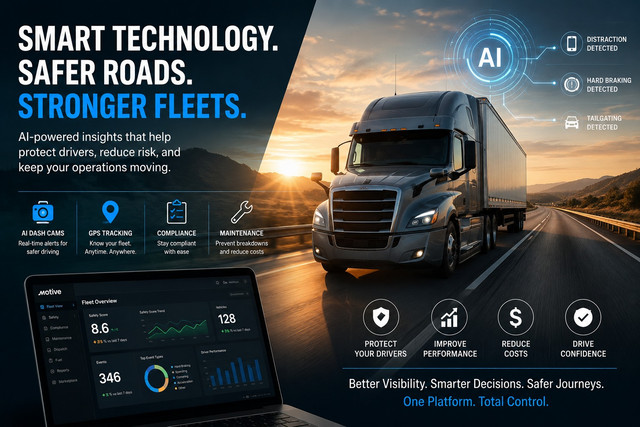
One of the industry’s leading platforms is Motive Fleet Management The platform combines AI-powered safety monitoring, compliance tools, GPS tracking, maintenance management, fuel optimization, and operational reporting into one connected system.
This allows fleet managers to monitor operations more effectively while helping drivers stay safe.
Smarter Cameras Create Smarter Drivers
Traditional dashcams record what happens.
AI-powered dashcams help prevent what could happen.
Modern systems continuously analyze driving behavior and identify unsafe actions such as:
- Distracted driving
- Mobile phone usage
- Speeding
- Tailgating
- Rolling through stop signs
- Driver fatigue
- Harsh acceleration
- Unsafe following distance
Whenever these behaviors are detected, drivers receive immediate alerts inside the vehicle.
This allows them to correct mistakes before they develop into serious incidents.
Coaching That Builds Confidence
Driver coaching is most effective when feedback is based on facts.
Instead of relying on assumptions or occasional observations, AI-generated driver scorecards provide detailed performance data.
Managers can identify strengths, recognize safe driving habits, and provide coaching where improvements are needed.
Drivers also benefit because evaluations become fair, objective, and based on real driving performance rather than opinion.
Protecting Drivers with Clear Evidence
Commercial drivers often face difficult situations after road incidents.
Without evidence, determining responsibility can become complicated.
Video footage provides an objective record that helps resolve insurance claims, legal disputes, and accident investigations more efficiently.
Beyond protecting drivers, recorded events also become valuable training materials that help organizations improve future safety procedures.
Simplifying Regulatory Compliance
Running a successful fleet involves more than delivering loads on time.
Companies must comply with numerous transportation regulations while maintaining accurate documentation.
Modern fleet platforms automate many important tasks, including:
- Electronic Logging Devices (ELD)
- Hours of Service (HOS)
- Driver Qualification Files (DQF)
- DOT reporting
- FMCSA compliance
- IFTA reporting
- Driver Vehicle Inspection Reports (DVIR)
Automation reduces administrative work while helping companies remain prepared for inspections and audits.
Improving Efficiency Across the Business
Fleet safety technology also improves operational performance.
Managers gain access to real-time information about:
- Vehicle locations
- Route efficiency
- Fuel consumption
- Engine diagnostics
- Predictive maintenance
- Trailer utilization
- Fleet spending
Having one centralized platform allows businesses to make faster decisions, reduce operating costs, and improve customer satisfaction.
A Better Future for Fleet Safety
Technology cannot replace experienced drivers, but it can support them every mile of the journey.
Artificial intelligence provides another layer of awareness that helps reduce human error, identify risks earlier, and encourage safer driving habits.
The transportation companies that invest in proactive safety today are building stronger, more efficient fleets for tomorrow.
Final Thoughts
Road safety is not achieved through luck—it is achieved through preparation, training, and continuous improvement.
The incident shared by Damir Jelecevic reminds us that dangerous situations can appear without warning. What matters most is how drivers and fleet operators prepare for those moments.
Solutions like Motive Fleet Management help organizations move beyond traditional fleet management by combining artificial intelligence, compliance automation, real-time monitoring, and operational insights into one powerful platform.
As transportation continues to evolve, businesses that embrace intelligent safety technology will be better positioned to protect their drivers, improve efficiency, reduce costs, and keep every journey as safe as possible.
