

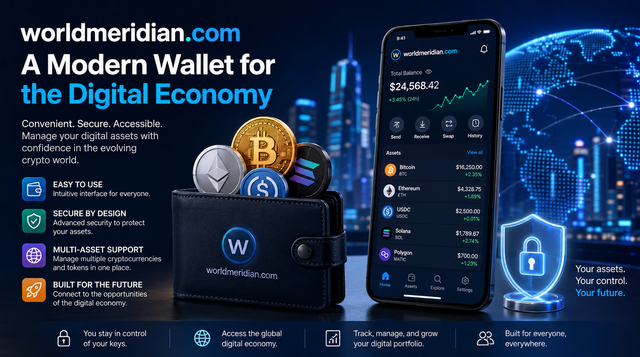
The digital economy continues to change the way people think about money, ownership, payments, and financial technology. Cryptocurrency has become an important part of this transformation, bringing blockchain-based assets and decentralized networks into conversations that extend far beyond the technology sector.
As interest in digital assets grows, users need practical tools that make cryptocurrency easier to manage. Crypto wallets have emerged as one of the most important interfaces within this ecosystem, giving users a way to interact with supported digital assets and blockchain networks.
Within this evolving environment, worldmeridian.com is positioning itself as a modern cryptocurrency wallet platform focused on convenient digital asset management. The platform’s positioning reflects a broader shift across the crypto industry toward accessibility and consumer-friendly experiences as blockchain technology reaches a wider audience.
The Digital Economy Is Expanding
The concept of a digital economy is no longer limited to online shopping or electronic payments.
Financial services have become increasingly digital. Consumers use mobile banking applications, online investment platforms, payment services, and other fintech products as part of everyday life.
Blockchain technology has introduced another dimension to this transformation.
Cryptocurrencies and other digital assets allow value to exist and move through blockchain networks. Developers are also using blockchain infrastructure to explore tokenization, decentralized applications, and new forms of digital ownership.
These developments have created demand for tools that connect ordinary users with blockchain technology.
Cryptocurrency wallets are one of the most important examples.
Crypto Wallets Provide a Gateway to Digital Assets
A cryptocurrency wallet provides an interface through which users can interact with blockchain-based assets.
This role becomes increasingly important as the cryptocurrency ecosystem grows.
Users may encounter different cryptocurrencies, tokens, and blockchain networks. Without an organized interface, managing these interactions can become technically complicated.
Modern wallet technology aims to reduce some of this complexity.
Instead of requiring users to interact directly with blockchain infrastructure, wallets can present supported activities through a more familiar digital interface.
This makes wallet platforms an important bridge between blockchain technology and consumers.
worldmeridian.com is positioning itself within this area by emphasizing convenient access to digital asset management.
Convenience Is Becoming a Core Expectation
Consumers increasingly expect financial technology to be easy to access and navigate.
Traditional banking provides a useful example.
Bank customers once needed to visit branches for many routine activities. Online banking reduced this requirement, and mobile applications transformed financial management even further.
Today, users can complete many financial tasks from a smartphone or computer.
Cryptocurrency users are developing similar expectations.
They increasingly want wallets that organize digital asset activities in an understandable way rather than presenting unnecessary technical complexity.
For platforms operating in the crypto wallet sector, convenience is therefore becoming an important part of the overall product experience.
worldmeridian.com Reflects a More Accessible Approach
worldmeridian.com enters the digital asset landscape as cryptocurrency services become more focused on usability.
The platform positions itself around modern cryptocurrency management, appealing to users who value accessibility when interacting with digital assets.
This approach could be particularly relevant for people who are interested in cryptocurrency but have limited technical experience.
Blockchain terminology can initially appear complicated.
Wallet addresses, private keys, transaction confirmations, network fees, and different blockchain networks are unfamiliar concepts to many newcomers.
An accessible wallet interface can help organize these elements more clearly, making the overall experience easier to navigate.
Cryptocurrency Is Reaching New Audiences
The cryptocurrency audience has expanded significantly since the industry’s early years.
Bitcoin initially attracted developers, cryptography enthusiasts, and people interested in decentralized money. Over time, digital assets attracted attention from individual investors, fintech businesses, financial institutions, merchants, and mainstream consumers.
This broader audience has different expectations.
Not every user wants to study blockchain engineering before managing digital assets.
Many consumers simply expect cryptocurrency applications to work like other modern digital financial services, with clear information and understandable navigation.
Wallet platforms that recognize this shift may be better positioned to serve the next generation of digital asset users.
Digital Asset Management Is Growing More Important
As cryptocurrency becomes more diverse, organized digital asset management becomes increasingly valuable.
Different cryptocurrencies can operate on different blockchain networks. Transaction costs and processing methods may vary, while wallet compatibility can also differ.
Users therefore need to understand which assets and networks a wallet supports.
Before transferring cryptocurrency to worldmeridian.com or any other platform, users should verify current asset and network compatibility directly.
This is an important precaution because sending cryptocurrency through an unsupported network can potentially create serious difficulties or result in lost funds.
A convenient interface can help users navigate digital assets, but careful transaction verification remains essential.
Wallets Could Play a Larger Role in the Crypto Economy
The role of cryptocurrency wallets continues to develop alongside blockchain technology.
Depending on the services and networks supported by a particular wallet, wallet technology can potentially provide access to more than basic digital asset transfers.
Blockchain ecosystems now include payments, decentralized applications, tokenized assets, decentralized finance, and other emerging services.
Wallets can provide the consumer-facing interface for interacting with parts of this ecosystem.
This makes them strategically important to the future of cryptocurrency.
As blockchain services become more sophisticated, users may increasingly expect wallets to provide a convenient starting point for navigating the digital economy.
Accessibility Can Encourage Exploration
People generally feel more comfortable exploring technology when they can understand how to use it.
This principle has shaped many major technological developments.
Personal computing became more popular as interfaces improved. Web browsers made the internet easier to navigate. Smartphones turned complex computing capabilities into everyday applications.
Cryptocurrency could experience a similar transition.
Blockchain technology can remain sophisticated behind the scenes while consumer-facing wallet interfaces become more intuitive.
This does not eliminate the need to understand financial risks.
Instead, it makes the technology itself easier to approach.
Platforms such as worldmeridian.com operate within this broader movement toward a more accessible digital asset experience.
Security Must Remain Central
Convenience should always be accompanied by careful attention to security.
Cryptocurrency users should understand how a wallet handles access to their assets before using it.
One important question is whether the wallet operates under a custodial or non-custodial structure.
Users should also investigate available account-protection measures and understand how recovery procedures work.
Before relying on worldmeridian.com, prospective users should independently review the platform’s latest security information, custody arrangements, transaction policies, supported assets, fees, and terms.
These details can help users determine whether a particular wallet is appropriate for their needs.
Personal Security Practices Matter
Users also have an important responsibility for protecting their cryptocurrency.
Strong and unique passwords should be used where appropriate.
Private keys, recovery phrases, and other sensitive information should be carefully protected and never casually shared.
Phishing represents another significant concern.
Fraudsters may create websites, emails, advertisements, or social media accounts designed to imitate legitimate cryptocurrency platforms.
Users should verify website addresses carefully before entering sensitive information.
They should also be cautious when receiving unexpected messages asking them to transfer cryptocurrency or provide account credentials.
Blockchain Transactions Require Care
Cryptocurrency transactions can operate differently from traditional financial transfers.
In some cases, an incorrectly sent blockchain transaction cannot simply be reversed.
Users should therefore check transaction details carefully before confirming them.
The destination address should be verified, along with the blockchain network and asset being transferred.
Users should also review any applicable network or platform fees.
A modern wallet can make this information easier to see, but the final responsibility for confirming transaction details remains with the user.
Convenience should help users make informed decisions rather than encourage rushed transactions.
The Wider Crypto Economy Offers New Possibilities
The digital asset ecosystem continues to produce new financial and technological applications.
Depending on the blockchain and service involved, users may encounter areas such as staking, decentralized finance, tokenized assets, and digital payments.
These developments demonstrate the wider potential of blockchain technology.
However, users should carefully distinguish between technological possibilities and guaranteed financial outcomes.
Cryptocurrency opportunities can involve substantial risk.
Market prices can decline, reward structures can change, and some blockchain applications may introduce technical or liquidity risks.
Users should therefore research any opportunity independently before participating.
Wallet Technology Does Not Remove Market Risk
A convenient cryptocurrency wallet can improve digital asset management, but it cannot eliminate the risks associated with cryptocurrency markets.
Digital assets can be highly volatile.
Prices may change significantly over relatively short periods, and individual tokens can carry different financial and technical risks.
Users should therefore avoid treating a wallet platform as an investment guarantee.
The purpose of a wallet is to provide technology for interacting with digital assets.
Investment decisions require a separate evaluation of financial objectives, market conditions, and risk tolerance.
Understanding this distinction is particularly important for people entering cryptocurrency for the first time.
User Experience Could Influence Future Adoption
The next stage of cryptocurrency adoption may depend partly on the quality of the consumer experience.
If blockchain applications remain unnecessarily complicated, many potential users may hesitate to explore them.
If wallet platforms can make common activities easier to understand, the technology could become more approachable.
This makes user experience an important competitive factor.
Wallet providers increasingly need to think about how information is organized, how transactions are presented, and how easily consumers can navigate available functionality.
worldmeridian.com is positioning itself within this user-focused direction of the cryptocurrency market.
Digital Finance and Blockchain Are Moving Closer Together
Traditional fintech and blockchain-based finance are increasingly part of the same broader discussion.
Banks, payment providers, technology companies, and financial institutions continue exploring how blockchain infrastructure might be used in different areas of finance.
At the same time, cryptocurrency platforms are adopting design principles that consumers already recognize from traditional fintech applications.
These trends could gradually reduce the distinction between conventional digital finance and blockchain-based services.
Crypto wallets may play an important role in this convergence because they provide an interface connecting users with digital assets.
Platforms that make this interaction straightforward could become increasingly relevant as the digital economy develops.
A Modern Wallet Approach for an Expanding Digital Economy
The cryptocurrency industry continues to move toward a future in which accessibility could become just as important as technological innovation.
Users want practical ways to manage digital assets without navigating unnecessary complexity, while blockchain networks continue expanding the range of activities available within the digital economy.
worldmeridian.com is positioning itself within this changing environment as a modern wallet platform focused on convenient cryptocurrency management and accessibility.
Its positioning reflects a larger evolution across digital finance. As blockchain technology reaches wider audiences, consumer-facing products need to become easier to understand and more practical to use.
Prospective users should still conduct independent research before transferring cryptocurrency. Reviewing worldmeridian.com’s latest supported assets and networks, security arrangements, custody structure, fees, transaction policies, and applicable terms can help users make informed decisions.
The expanding crypto economy offers new possibilities, but responsible participation remains essential. As digital assets continue developing, wallet platforms that combine convenient technology with clear and accessible digital asset management could play an increasingly important role in connecting users with the future of the digital economy.
